
It is somewhat of a surprise to me to reflect on the obvious: that, despite my love for the Yapese language, and for my experience generally in Yap, there is no slightest possibility of my ever genuinely 'going native' - not only living permanently in Yap (which might have happened under some circumstances), but living essentially a Yapese way of life. This is something that others we know have done - Margie Fal'anruw, Russian Alex - but as I contemplated writing something today, and talking about the relationships we had in Yap, I come across the fact that all were with ex-patriates. Until this moment, I do not think I had thought of the implications of this.
When, in 1972, I spent three months in Yap, I immediately made myself acquainted with the Protestant mission there.
It would be literally accurate to say that the thought of my attending Catholic services was unthinkable. When people say something is unthinkable, they generally mean that they do think about it - and find it impossibly abhorrent. I do not think that I could ever even have thought of the Catholic church as a place to go to church. Had Yap been mostly Muslim, the idea would not have been more impossible for me to conceive.
Yet until 1967 - two years before my first stay in the island - no non-Catholic presence was possible in Yap. Under the influence of the then-priest, the government forbade any missionary presence whatever. Yap was Catholic - and was going to stay that way (a shipment of condoms somehow arrived there sometime in the 1960s. The priest seized it and destroyed it. There was no action against him for this.)
The German Liebenzellermission had worked in Palau for some years before this, to produce a thriving Palauan evangelical presence - and a translation of the Bible into Palauan. In 1972, the mission in Yap was five years old. Under Ed Kalau a thriving nucleus of evangelical Yapese existed. They had their own church building. Sister (their term) Hildegarde Thieme had nearly finished the first draught of a translation of the New Testament and major parts of the Old. It was this church I attended from January to March of 1972. It was this church that Susan and I attended from March, 1976 to May, 1984.
Nevertheless, we never joined. I was definitely convinced of the duty of a Christian to be in submission to the properly-constituted elders of the Church. Joining would have been a definite act of submission. Our home church was the Reformed Church of Avondale - and remained so during the eight years we lived in Yap. We were friends of the new pastor, Heinz Hengstler, his wife Erika, Sister Doris. I often translated from English to Yapese for visiting English-only preachers. But we never joined. I was convinced of the rightness of Reformed worship. Perhaps there were other reasons, but baptism was one. The Yap Evangelical Church would not baptise infants.
During our eight years in Yap we became close friends with a few others. Don Evans was one - a dear friend, and who still lives in Yap. This is his hotel.
Our even closer friend was Father Paul Horgan, SJ. Father Horgan quickly adopted the practice of coming to our house once a week - perhaps on Fridays? - for socialisation, ice cream, eventually a glass of sherry (which we brought in from Guam, duty-free).
I was always somewhat uncomfortably aware that we never ever mentioned religion with Father Horgan. Perhaps the eight years we spent in Yap began to bring the idea of Catholics as persons, not just an idea, to a bit more reality in my mind. How it was, I do not know, but Father Horgan became, I think, our dearest friend. Our later relation with him makes this clear.
By sometime in late August or early September, Susan was pregnant.
26 August 2012


12 August 2012
Real life
Well, yes, there was a bit more to our life in Yap than my working context. In particular, you may wonder what things were like for Susan.
When we first moved to Auckland, Susan was terribly lonely, and suffered considerably from what might be termed 'culture shock.'
Yap, one would suppose, must have made the adustment to New Zealand seem a doddle.
Perhaps only more or less.
I will try and persuade Susan to add something to this post, and she may well contradict what I say. It seems to me, however, that some things were distinctly harder to get used to:
[Susan]
Okay - all of the above is right but one of the hardest things about Yap was that very few people who we met had the intention of staying there. Most of the people were on some type of contract - usually a two year one - and then they would leave. Things were often unsettled - but I was young and change seemed to be fine so bring on the "characters" that entered our life out there and there were many of those.
There was also the paradox of life on a "remote" island. Our friends not living there thought we were living in island luxury, rather like living in Fiji. It wasn't. There were mangrove swamps at many points near the shore so there was no easy swimming access. The roads to the villages outside of the main town were not good, horrid or horrible - depending on the time of year. One time - only once - in eight years, I took the kids with a friend out to the end of the island for a swim. My friend had a very big truck that had four wheel drive. By the time we got there, the kids were sick and there was no running water to clean up various messes - plus the swimming area wasn't safe for young children. It was very deep, there was coral on the rocks that could cause injury - We left after an hour and never returned.
[John]
Susan's daily life, however, she has not talked about - yet.
When we first moved to Auckland, Susan was terribly lonely, and suffered considerably from what might be termed 'culture shock.'
Yap, one would suppose, must have made the adustment to New Zealand seem a doddle.
Perhaps only more or less.
I will try and persuade Susan to add something to this post, and she may well contradict what I say. It seems to me, however, that some things were distinctly harder to get used to:
- the Yapese - naturally, Susan didn't speak Yapese. By the time we left, she had picked up enough, both from talking with people and from reading my book, to be able to get along roughly. Nevertheless, they were, at the start, a completely foreign people to her.
- the climate - it is somewhat hotter than Honolulu, where she had lived for six years, and somewhat more humid
- supplies of western goods - distinctly limited by contrast both with Honolulu and with Auckland
- being without motor transport
- Susan's acquaintances - the friends she soon made were, naturally, expatriates - and most of these were Americans. How much difference did this make? Possibly a fair bit. New Zealanders - particularly those whom we knew in the 1970s - were a fairly homogeneous lot, sharing a common background of assumptions - and ones that we had not grown up with. Susan quickly became close friends with Verna Curtis, who ran the YCA - Yap Cooperative Association - general store; and we both made friends with Father Paul Horgan, SJ, one of the two local priests - despite, I should say, his Catholicism!
- American goods - well, perhaps this made less difference. Quite a lot of our supplies had been imported from ... New Zealand! Nevertheless, there was a considerable degree of familiarity that she had not had in Auckland. Our first day in Auckland, Bruce Biggs' wife Joy had taken her shopping; she finished that day completely bewildered. When we had left Auckland to move to Yap, I had told her there would be no fresh goods whatever available in Yap. The day we arrived she went to YCA and there was plenty there - that day had been the first air-freigh shipment of such things!
- the Yapese - of course she had not before dwelt in a place with lots of Yapese people. She had, however, lived six years in Honolulu, where we haole (white people - pakeha) were a minority. Chinese, Japanese, and Filipinos comprise the bulk of the population. Susan was not unused to such a situation.
- the climate - again, she had lived in the tropics for six years. In Honolulu we had not had air-conditioning. It is true that Yap was hotter, and more humid. It was, nevertheless, a climate she was used to.
[Susan]
Okay - all of the above is right but one of the hardest things about Yap was that very few people who we met had the intention of staying there. Most of the people were on some type of contract - usually a two year one - and then they would leave. Things were often unsettled - but I was young and change seemed to be fine so bring on the "characters" that entered our life out there and there were many of those.
There was also the paradox of life on a "remote" island. Our friends not living there thought we were living in island luxury, rather like living in Fiji. It wasn't. There were mangrove swamps at many points near the shore so there was no easy swimming access. The roads to the villages outside of the main town were not good, horrid or horrible - depending on the time of year. One time - only once - in eight years, I took the kids with a friend out to the end of the island for a swim. My friend had a very big truck that had four wheel drive. By the time we got there, the kids were sick and there was no running water to clean up various messes - plus the swimming area wasn't safe for young children. It was very deep, there was coral on the rocks that could cause injury - We left after an hour and never returned.
[John]
Susan's daily life, however, she has not talked about - yet.
11 August 2012
Routine failure
I must, last week-end, have been genuinely ill. Not only did I take the Friday off on sick leave - a rarity for me - but only on Tuesday of this week did I remember that I had not written my weekly post.
And nor am I going to be able to do so this week-end - and probably not next, either. I had some sort of 'flu from late Thursday - fever being the principal symptom. I missed the first rehearsal for the August concert - and I think this is the first time I have ever missed a rehearsal for illness. I had hoped to write something this morning, but I think it will not happen. Possibly tomorrow, but not too likely. Next Saturday is the concert, and on the Sunday we will be with Eddie and Eveline.
So... in case I don't produce the next thrilling episode in "The Jensens vs Yap" until 25 or 26 August, I have at least now made my excuses, such as they are.
jj
28 July 2012
Routine
The argument that I used to persuade the education department to hire me was that I would help them master the new orthography. The intention had to be reconciled with the reality of where the funding for my job was to come from: The Bilingual Education Act, Title VII of the Elementary and Secondary Education Act of 1968, and its 1974 amendment. The theory behind this bit of law was that a major reason for poor educational performance on the part of students was their being forced to use a language not native to them. It was introduced by a senator from Texas, where a large number of pupils were native speakers of Spanish. There is, I have no doubt, some truth to the idea. My real job at the beginning, in addition to overseeing the spelling of school materials, was to produce a dictionary of Yapese with definitions in Yapese as well as English. Whether this was a project based on clear ideas or not I cannot say, but this was what I was in Yap to do.
The Yap Department of Education offices were in two modest-sized buildings. One comprised perhaps a dozen administration offices; the other had been classrooms (six of them, I think), and was where all the development work was done - and where my desk was. The leader of the Bilingual Education project of which I, and half a dozen or so Yapese curriculum-development staff, were the workforce, was run by an American lady, Bethel Oestman. Bethel had been a Peace Corps Volunteer. Susan and I and Johnny actually stayed in her house in Yap for the first few days - a week? - that we were there. The project was Bethel's. She was a person of contagious enthusiasm, and great industry.
There were a number of curriculum writers who were my co-workers:
We all worked together in one classroom, desks around the room. These were, in a way, halcyon days for me. When I first began living in Yap - in 1969, again in 1972, and those two weeks in 1975 - I had normally spoken Yapese with Yapese persons - but I was very conscious of speaking a foreign language. These first few months working in the Education Department, where, except when talking to Bethel or other non-Yapese, I was immersed in a totally Yapese language environment all day, five days a week, had the result that when I spoke in Yapese, I was no longer speaking Yapese; I was just speaking.
To be sure, I imagined, by the time I left Yap, that my Yapese was practically native. This was a very silly idea, as my work over the last year or so in translating some of those materials into English has shown me. Yet - the translation itself is still that simply of reading an essay - not that of reading an essay in a (consciously) foreign tongue. Then I have to write it in English. To the extent that the dictionary work I did in Yap was well-done - a rather different question from whether it was worth doing, I am afraid - to that extent, it was possible only because of the fact that Yapese was my normal environment during my working day, and a considerable amount of my leisure time as well.
I recall an incident that happened a couple of years later that brings the difference to mind fairly sharply. I had gone to the bank, and Giloochen happened to be there in the same queue as me, just in front of me. We were chatting - about what, I don't know - work, perhaps - when one of the two (American) Mormon missionaries came into the queue behind me. He had, by then, learnt some Yapese, but was not very comfortable at it. And he knew Giloochen - so addressed her in English. And she replied. In English. It was a startling experience for me. For an instance my mind saw, not Giloochen, whom I knew, to whom I gave materials for typing, with whom I shared betel nut. She was, for an instant, brown-skinned native girl. It was a shocking feeling.
The Yap Department of Education offices were in two modest-sized buildings. One comprised perhaps a dozen administration offices; the other had been classrooms (six of them, I think), and was where all the development work was done - and where my desk was. The leader of the Bilingual Education project of which I, and half a dozen or so Yapese curriculum-development staff, were the workforce, was run by an American lady, Bethel Oestman. Bethel had been a Peace Corps Volunteer. Susan and I and Johnny actually stayed in her house in Yap for the first few days - a week? - that we were there. The project was Bethel's. She was a person of contagious enthusiasm, and great industry.
There were a number of curriculum writers who were my co-workers:
- Defeg - now dead - was perhaps the most brilliant teacher I have ever known - and one of the funniest persons I have known. He still taught at times, but his main work was writing materials for us.
- Fithing - our artist. I still have a lot of his drawings.
- Ilyaw - curriculum writer - I had known her in Hawai'i.
- Giloochen - typist, secretary
- Chingyen - curriculum writer (he didn't like me very well - I suspect my arrogance rather got up his nose :-)
- Gilnifrad - curriculum writer and a very dear friend
- Pugram - my closest friend in Yap. He became the Director of Education, perhaps still is now
We all worked together in one classroom, desks around the room. These were, in a way, halcyon days for me. When I first began living in Yap - in 1969, again in 1972, and those two weeks in 1975 - I had normally spoken Yapese with Yapese persons - but I was very conscious of speaking a foreign language. These first few months working in the Education Department, where, except when talking to Bethel or other non-Yapese, I was immersed in a totally Yapese language environment all day, five days a week, had the result that when I spoke in Yapese, I was no longer speaking Yapese; I was just speaking.
To be sure, I imagined, by the time I left Yap, that my Yapese was practically native. This was a very silly idea, as my work over the last year or so in translating some of those materials into English has shown me. Yet - the translation itself is still that simply of reading an essay - not that of reading an essay in a (consciously) foreign tongue. Then I have to write it in English. To the extent that the dictionary work I did in Yap was well-done - a rather different question from whether it was worth doing, I am afraid - to that extent, it was possible only because of the fact that Yapese was my normal environment during my working day, and a considerable amount of my leisure time as well.
I recall an incident that happened a couple of years later that brings the difference to mind fairly sharply. I had gone to the bank, and Giloochen happened to be there in the same queue as me, just in front of me. We were chatting - about what, I don't know - work, perhaps - when one of the two (American) Mormon missionaries came into the queue behind me. He had, by then, learnt some Yapese, but was not very comfortable at it. And he knew Giloochen - so addressed her in English. And she replied. In English. It was a startling experience for me. For an instance my mind saw, not Giloochen, whom I knew, to whom I gave materials for typing, with whom I shared betel nut. She was, for an instant, brown-skinned native girl. It was a shocking feeling.
21 July 2012
Mise en scène
So now we are in Yap - and, as it happens, will be here for the next eight years. This is possibly a daunting prospect to Susan. Well, you know what Yap is like ... what? You don't?? Hmm... Perhaps I had better give you a little background first.
 OK, well, perhaps you want a little more information than just that satellite photo. Is it more or less the size of the North Island of New Zealand? Or perhaps just a patch of mud in a puddle in my backyard?
Yap is about 26Km long, tip to tip, and about 11 Km wide at the widest point. It comprises about 100 square Kilometres in area. It is located at approximately 9.5 degrees North, 138 degrees East. There. Does that clarify things for you?
Oh, I see - you want to know what it is like.
Not so easy to say, in a way. Try saying what your home is like.
And that, in a way, is my problem. When we moved to Yap in March, 1976, I think I fully believed it would be my home for the rest of my life - mine, and therefore, I presumed, Susan's. I don't suppose I gave much thought to my children.
Writing this post brings back a flood of memories. Our house, up on the hill above the police station and the prison - the latter a wooden building with an iron roof, under the eaves of which the prisoners would occasionally crawl when they wanted to go home for a while. The coconut trees and other trees around the house, with the moon shining through them, and the sound of the sea at all times. The sound of the violent rain shower marching through the trees for our house. The stone-paved paths through Keeng, and the ones up behind Fanoowaay's store - in the village that would look like raw bush to those who didn't know it was a village. All these and hundreds more images crowd in when I think of those years in Yap.
There were roads to many parts of Yap when we lived there, but I was never on most of them. One thing difficult for non-Yapese to appreciate is that, except for the 'town' part of Yap - the dozen or so government office buildings, the hundred or so town dwellings around the estuary called locally 'Beenjoo Bay' - 'beenjoo' being borrowed from the Japanese word for 'toilet' - there being so many privies over-hanging the estuary - except for these buildings and a handful of small stores, as well as YCA - the Yap Cooperative Association - all the rest of Yap is 'village.' And 'village' is not 'public.' Each 'village' - each binaew - is that binaew's land. You don't go into another village unless you have business there - and someone there - usually the chief - knows it. And every bit of Yap is part of some village (even 'town' which is the village called Doonguch - but long given up as really public).
So in a way, Yap is, to me, very large. Just as I have been in only a relatively small percentage of the states of California and Hawai'i, and the North Island of New Zealand, I have not been in most of Yap. But I know it well. It is - was - home.
We lived in a house owned by the government. It was up a little hill, on the way to the Education Department, where I worked. The house was very large - before us, I think it was lived in by half a dozen government workers. There were, more or less, six bedrooms - one of them very small. Two of those rooms eventually became workrooms for me - one for my amateur radio gear, one as an office. By the time we left, when we had four children, one slept in each room - and Sue and I on a futon on the living room floor. We had overhead fans installed in each room - at government expense.
Government expense. Reflecting back, I think of what a large amount of government money was spent on us. We had numerous modifications done on the house. One central room eventually had air-conditioning. Twice - or perhaps three times? - all the internal woodwork was replaced, the previous having been eaten to nothing by termites. We had electric power - which often actually worked - though most village areas had none (and ours was free). We had piped water, which, during the rainy season, usually had water in it - though, prudently, we boiled it before drinking it. We also had a luxury that most government houses lacked: a water tank next the house that connected into the water system. During the onset of the dry season - roughly December to June - when the water was on only a couple of hours morning and evening - we could refill the tank (of course at the heart of the dry season that was unavailable; it was hauling water in 20-litre jerry cans three times a week and flush once a day). But, all in all, the house had what we wanted.
On the other hand, things were not always so convenient for Susan.
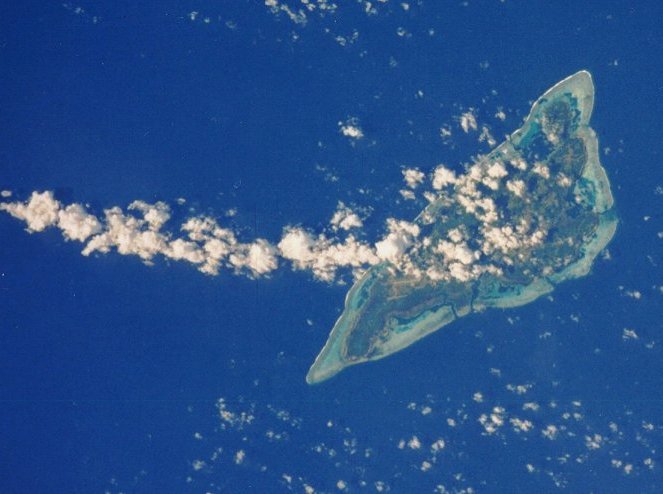
Yap is about 26Km long, tip to tip, and about 11 Km wide at the widest point. It comprises about 100 square Kilometres in area. It is located at approximately 9.5 degrees North, 138 degrees East. There. Does that clarify things for you?
Oh, I see - you want to know what it is like.
Not so easy to say, in a way. Try saying what your home is like.
And that, in a way, is my problem. When we moved to Yap in March, 1976, I think I fully believed it would be my home for the rest of my life - mine, and therefore, I presumed, Susan's. I don't suppose I gave much thought to my children.
Writing this post brings back a flood of memories. Our house, up on the hill above the police station and the prison - the latter a wooden building with an iron roof, under the eaves of which the prisoners would occasionally crawl when they wanted to go home for a while. The coconut trees and other trees around the house, with the moon shining through them, and the sound of the sea at all times. The sound of the violent rain shower marching through the trees for our house. The stone-paved paths through Keeng, and the ones up behind Fanoowaay's store - in the village that would look like raw bush to those who didn't know it was a village. All these and hundreds more images crowd in when I think of those years in Yap.
There were roads to many parts of Yap when we lived there, but I was never on most of them. One thing difficult for non-Yapese to appreciate is that, except for the 'town' part of Yap - the dozen or so government office buildings, the hundred or so town dwellings around the estuary called locally 'Beenjoo Bay' - 'beenjoo' being borrowed from the Japanese word for 'toilet' - there being so many privies over-hanging the estuary - except for these buildings and a handful of small stores, as well as YCA - the Yap Cooperative Association - all the rest of Yap is 'village.' And 'village' is not 'public.' Each 'village' - each binaew - is that binaew's land. You don't go into another village unless you have business there - and someone there - usually the chief - knows it. And every bit of Yap is part of some village (even 'town' which is the village called Doonguch - but long given up as really public).
So in a way, Yap is, to me, very large. Just as I have been in only a relatively small percentage of the states of California and Hawai'i, and the North Island of New Zealand, I have not been in most of Yap. But I know it well. It is - was - home.
We lived in a house owned by the government. It was up a little hill, on the way to the Education Department, where I worked. The house was very large - before us, I think it was lived in by half a dozen government workers. There were, more or less, six bedrooms - one of them very small. Two of those rooms eventually became workrooms for me - one for my amateur radio gear, one as an office. By the time we left, when we had four children, one slept in each room - and Sue and I on a futon on the living room floor. We had overhead fans installed in each room - at government expense.
Government expense. Reflecting back, I think of what a large amount of government money was spent on us. We had numerous modifications done on the house. One central room eventually had air-conditioning. Twice - or perhaps three times? - all the internal woodwork was replaced, the previous having been eaten to nothing by termites. We had electric power - which often actually worked - though most village areas had none (and ours was free). We had piped water, which, during the rainy season, usually had water in it - though, prudently, we boiled it before drinking it. We also had a luxury that most government houses lacked: a water tank next the house that connected into the water system. During the onset of the dry season - roughly December to June - when the water was on only a couple of hours morning and evening - we could refill the tank (of course at the heart of the dry season that was unavailable; it was hauling water in 20-litre jerry cans three times a week and flush once a day). But, all in all, the house had what we wanted.
On the other hand, things were not always so convenient for Susan.
15 July 2012
Exodus
I have tried and failed - well, I did not try very hard - to find, on the web, the quickest way to get from Auckland to Yap. It may be that it is easier today - though I will not be surprised to find it is not.
In 1976, the route was:
Manila is hot. It is hotter both than Honolulu and than Yap. And by now we were three-years-acclimatised to Auckland. Did the hotel room have air-conditioning? I am not sure that it did. We were certainly uncomfortable.
We were, after all, in Manila only for 24 hours. We arrived in the morning, I think, and left the next morning. The hotel was near the airport, but we never saw the city. Nevertheless, it was a bit of a revelation for us both. Unlike pakeha westerners, the Filipinos are not fond of boring. Many of the cars that we saw were innocent of their original paint, being decorated with gorgeous tropical scenes. The jeepneys were especially magnificent.
Nonetheless, I had, as I have said before, romantic notions of Micronesia. In Guam, instead of a more conventional hotel, we stayed at the Micronesia Hotel. Perhaps it doesn't exist any longer - at least I didn't find it with a web search - or perhaps it wasn't called that. It wasn't much of a hotel. Its attraction for me had been the fact that in 1972 I had stayed a night or two there, and it was the favourite resort of Yapese travelling through - principally because it was very cheap. We were there two nights.
In reflecting on this trip it has come back to me with force the dismay with which Susan had viewed her arrival in Auckland in 1973. She felt cut off from all that she had known. She feared that she would be completely alone (which, for her first year, was not far from the truth). Here we were in Guam - Guam! - at a seedy sprawling collection of buildings, in a room with a single large and noisy fan over the (quite large) double bed, and headed for a place that, John told her, had no fresh fruit or vegetables (of the sort she was used to, that is), was inhabited by people who, mostly, spoke no, or little, English, and which was accessed from Auckland only by a three-day journey involving three different airlines. I was insensitive enough at the time to her distress; I now know only by imagination what it must have been.
We were there two nights. Eight-month-old Johnny slept with us in the double bed - and had a habit of half-waking up during the night, standing half up, and falling face forward on top of one of us. The principle excitement, however, was that the hotel was apparently only a few hundred metres away from the landing end of the runways at the airport.
I don't remember how many times that first night we were wakened by 'planes coming in - or perhaps it was the takeoff end of the runway and they were leaving? I only remember that I hadn't known this would happen. The first occurrence caused us both to shoot up to a sitting position on full alert, heart pounding. The room shook.
I think that the second night's flights must not have wakened us at all - at least I don't remember their doing so. So readily we adapt to our environment. After the Micronesia Hotel, Yap was a relief.
Landing in Yap was then a moment of great emotion for me. I suspect it would still be today, even although now the 'planes are 747s and the runway is long enough for them - by contrast with the 727 that brought us there to land on the legally underlength runway. The 'plane has to hit the very beginning of the runway, and stop as fast as possible, which it does with a great uproar of dust and noise.
Auckland, Honolulu, Hilo, and Yap are landings that I never make without deep feelings of coming home.
In 1976, the route was:
- Auckland to Manila, via Sydney
- spend one night in Manila
- Manila to Guam
- spend two nights in Guam
- Guam to Yap
Manila is hot. It is hotter both than Honolulu and than Yap. And by now we were three-years-acclimatised to Auckland. Did the hotel room have air-conditioning? I am not sure that it did. We were certainly uncomfortable.
We were, after all, in Manila only for 24 hours. We arrived in the morning, I think, and left the next morning. The hotel was near the airport, but we never saw the city. Nevertheless, it was a bit of a revelation for us both. Unlike pakeha westerners, the Filipinos are not fond of boring. Many of the cars that we saw were innocent of their original paint, being decorated with gorgeous tropical scenes. The jeepneys were especially magnificent.
Nonetheless, I had, as I have said before, romantic notions of Micronesia. In Guam, instead of a more conventional hotel, we stayed at the Micronesia Hotel. Perhaps it doesn't exist any longer - at least I didn't find it with a web search - or perhaps it wasn't called that. It wasn't much of a hotel. Its attraction for me had been the fact that in 1972 I had stayed a night or two there, and it was the favourite resort of Yapese travelling through - principally because it was very cheap. We were there two nights.
In reflecting on this trip it has come back to me with force the dismay with which Susan had viewed her arrival in Auckland in 1973. She felt cut off from all that she had known. She feared that she would be completely alone (which, for her first year, was not far from the truth). Here we were in Guam - Guam! - at a seedy sprawling collection of buildings, in a room with a single large and noisy fan over the (quite large) double bed, and headed for a place that, John told her, had no fresh fruit or vegetables (of the sort she was used to, that is), was inhabited by people who, mostly, spoke no, or little, English, and which was accessed from Auckland only by a three-day journey involving three different airlines. I was insensitive enough at the time to her distress; I now know only by imagination what it must have been.
We were there two nights. Eight-month-old Johnny slept with us in the double bed - and had a habit of half-waking up during the night, standing half up, and falling face forward on top of one of us. The principle excitement, however, was that the hotel was apparently only a few hundred metres away from the landing end of the runways at the airport.
I don't remember how many times that first night we were wakened by 'planes coming in - or perhaps it was the takeoff end of the runway and they were leaving? I only remember that I hadn't known this would happen. The first occurrence caused us both to shoot up to a sitting position on full alert, heart pounding. The room shook.
I think that the second night's flights must not have wakened us at all - at least I don't remember their doing so. So readily we adapt to our environment. After the Micronesia Hotel, Yap was a relief.
Landing in Yap was then a moment of great emotion for me. I suspect it would still be today, even although now the 'planes are 747s and the runway is long enough for them - by contrast with the 727 that brought us there to land on the legally underlength runway. The 'plane has to hit the very beginning of the runway, and stop as fast as possible, which it does with a great uproar of dust and noise.
Auckland, Honolulu, Hilo, and Yap are landings that I never make without deep feelings of coming home.
07 July 2012
Change of address
No one can know the hidden counsels of God. His revealed purposes - that He loves us, that He has provided the means of our salvation, that He wishes all men to be saved - these things we know. That this or that happening in our lives has been provided by God for this or that immediate purpose, this is something that we often seek to know. We will do well to avoid placing inordinate weight on such intuitions of ours.
I was immediately sure that God had intended me to be, as it were, an apostle to the Yapese. Had He not so ordered things that, in 1970, when I was sure I was finished with linguistics forever, I was reinstated as a linguistics student? When I was going to study to become a Baptist minister, had God not turned things around so that I continued working in linguistics - and writing two Yapese books, forsooth! And now, when this job was finished, instead of moving to Perth to teach undergraduate linguistics students, I was to go to Yap.
I do not think these thoughts were simply wrong. Nevertheless, this sense of mission was to colour not only my experience for the next eight years in Yap, but also to cause me some grief when, in 1984, we left.
Going we were - but we didn't know when. The Micronesian government - the Trust Territory of the Pacific Islands, as it was then, and until 1986 - had to send me a contract. This was necessary not only to ensure that I would have a job there, but because they were to pay for travel and freight arrangements. Susan and I began the process of getting ready to move. Liz, our boarder, found a place to live. We found homes for Raewyn and Bronwyn, our two cats (and one of them - Raewyn, I think - ran away from her new owner the day after we left her there and was never seen again). We had travel documents to attend to - not visas, since Micronesia was under the United States at the time, and our US passports were all we needed. We arranged with the Avondale Reformed Church to be officially our home church so long as we were away.
The last day of my employment as a lecturer was 31 January. I still had no contract.
I had been one of the small number of interactive users of the Computer Centre's Burroughs B6700 - 'interactive' meaning what modern computer users take for granted. You know, you sit at a keyboard, with a screen in front of you. You type things in; the computer displays things back. This was not normal in New Zealand in 1976.
In 1976 you typed things into a keyboard on a card-punch machine, a very noisy process, since what you typed resulted in rectangular holes being punched in light cardboard punchcards. Boxes of these then were fed through a card reader, which resulted in computer-readable information being read into the machine - and, if you were allowed the use of magnetic tape, could then be put onto tape so you wouldn't have to lug cards around in future.
A few lucky users - I was one - had the use of teletype machines that sent data straight to the computer - and the computer responded immediately on the teleprinter. This was pretty exciting. There were even a few CRT terminals, which I was occasionally able to use, but they were in high demand.
But the system on the Burroughs that talked with these terminals was called CANDE - 'Command AND Edit' - and was moderately complex to use. I understood it fairly well.
By February, 1976 I had no income. John White, director of the Computer Centre, took pity on me, and, mostly, I suspect, as an act of charity, paid me for a few weeks to write some user-oriented documentation for CANDE.
We were, however, still paying rent for our flat. We were, therefore, the beneficiaries of more charity. Nevil Brownlee and his wife Frances had a fairly large house in Remuera (or was it Epsom?). For - what? three weeks? six weeks? - Susan, Johnny, and I lived with Nevil and Frances.
In March - about the middle, I think - the contract came. Our belongings were packed for shipping. Sue, Johnny and I left Auckland - perhaps, for what we knew, for good.
Subscribe to:
Posts (Atom)